中文简体
中文简体 Español
 عربى
عربىYour electric oven starts smoking during a bake, and you immediately wonder whether the food, the appliance, or your safety is at risk. In the vast majority of cases, the smoke comes from one of four sources: the protective coating on a new oven burning off, accumulated grease and food residue, a deteriorated heating element, or blocked ventilation. The correct response ranges from doing nothing to calling a technician, and you can usually identify the cause in under five minutes.
Content
First-Time Use: The Normal Manufacturing Burn-Off
If your electric oven is new, smoke during the first one to three uses is normal and harmless. Electric ovens leave the factory with protective oils, forming lubricants and manufacturing residue on the heating elements, interior panels, and sealed cavities. When the elements first reach high temperature, typically 200 °C and above, those residues vaporize and produce smoke.
You will typically notice:
- Light white or grey smoke rising from the oven vents
- An oily, metallic, or distinctly "new appliance" smell
- Smoke that fades after 10 to 30 minutes of running empty
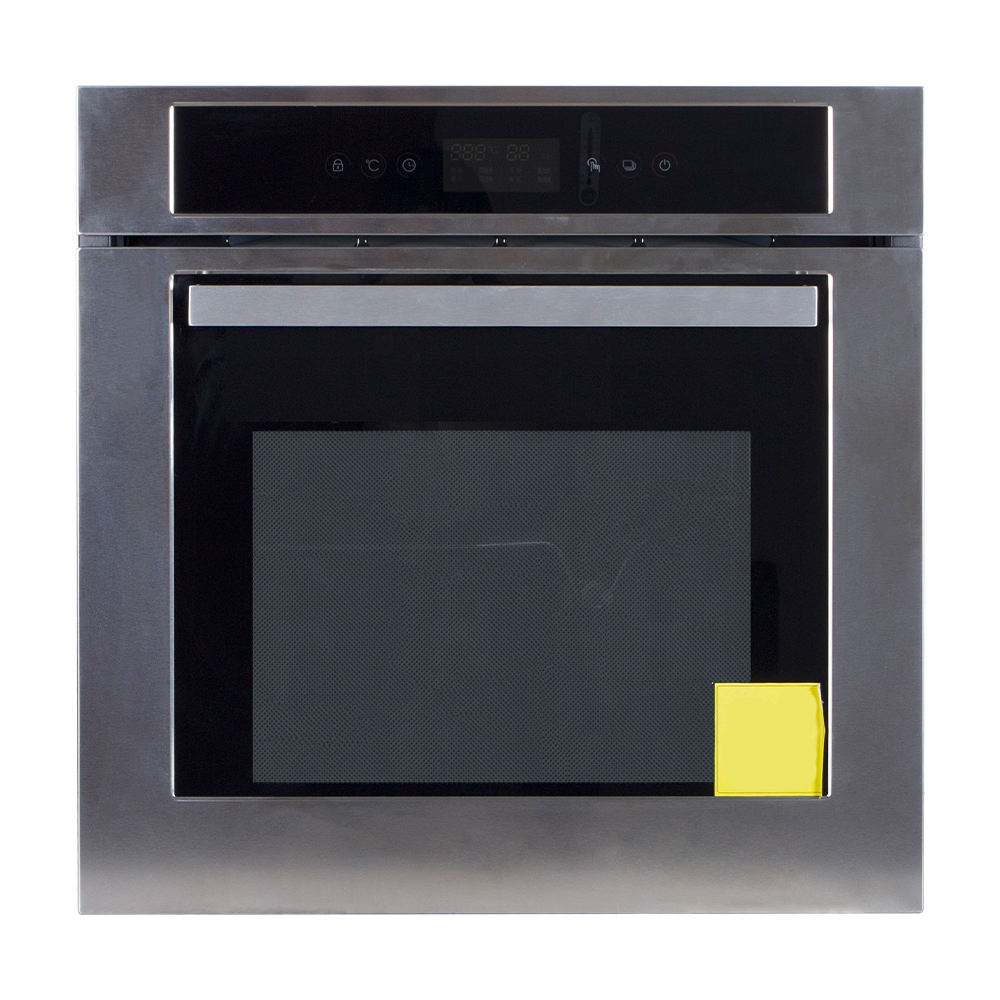
This is a burn-off process, not a fault. Before cooking your first meal, run the empty oven at 200 °C for 30 minutes, let it cool, and wipe the interior with a damp cloth. Keep a window open or the extractor hood running during this cycle. Even careful manufacturers apply surface protection to prevent corrosion in transit, which is why a premium model such as our built-in digital baking oven may emit a small amount of smoke on its very first run. As an electric oven manufacturer, we treat this as a normal part of commissioning, not a defect.
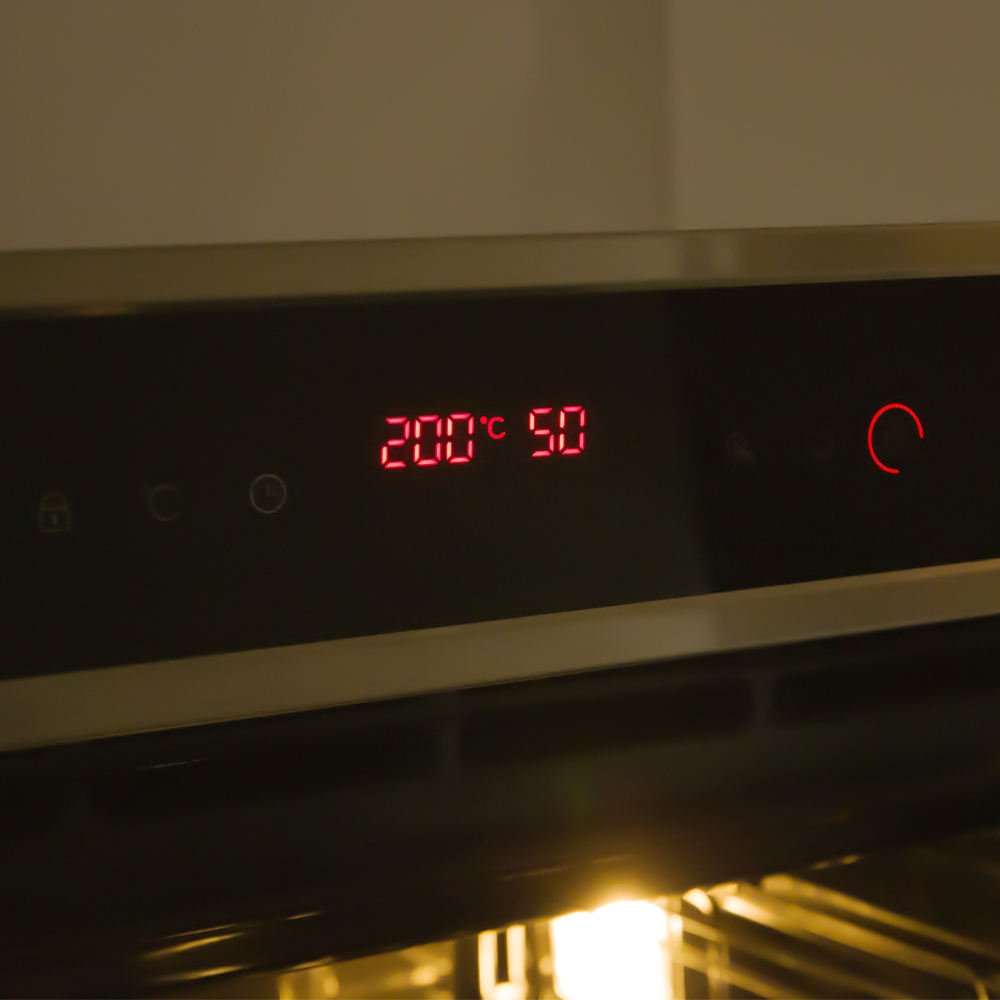 Wholesale Household Built in Electric Digital Baking Oven Manufacturer, Factory ShengZhou GeXiang Electric is China Household Built in Electric Digital Baking Oven manufacturers and OEM & ODM factory,Household Built-i...View Product →
Grease, Food Residue, and Spillovers
In an oven that has been used for weeks or months, smoke is almost always caused by burnt food residue, especially grease and sugars that have dripped onto the floor or the lower heating element. During normal roasting and baking, fat, marinade, and crumbs fall to the bottom of the cavity. The next time the oven heats up, these deposits carbonize and release smoke. The smell usually matches the food you cooked recently, and you may hear a faint sizzle.
Where Residue Hides
Residue is rarely limited to the visible floor of the oven, so a quick wipe is usually not enough. Check these five zones:
- The bottom panel and the space beneath the lower heating element
- The rear wall and side panels, where convection fans push grease upward
- The inner surface of the door glass
- The rims and corners of baking trays stored inside the oven
- Around the element brackets, where drips bake onto metal
The Cleaning Fix
Scrape off loose debris with a plastic scraper, then apply a paste of baking soda and water to the stained areas and leave it for 15 minutes before wiping. Avoid abrasive pads on enamel surfaces and never use oven cleaner on the heating elements themselves. For a complete process, including how to remove and clean the door safely, see our step-by-step guide on how to clean an electric wall oven.
Heating Element Wear and Electrical Faults
If the smoke is accompanied by sparks, a sharp electrical smell, or visible damage on the heating element, stop using the oven immediately and have the element replaced. Electric ovens use tubular heating elements that cycle on and off during cooking; over time, the metal sheath can crack, develop pinholes, or deteriorate. When the internal resistance wire arcs against the damaged sheath, it produces an acrid smoke that smells like burning wiring rather than food.
Signs of a Failing Element
- Orange flashes, sparks, or small flames visible through the door
- Blistered, discolored, or cracked surfaces on the heating tubes
- Uneven glowing, with bright orange spots next to dark sections
- A burning electrical smell that lingers after the oven switches off
A damaged element cannot be repaired and must be replaced. The same principle applies to damaged wiring or a burnt terminal block. These failures are not solved by cleaning, and using the oven again before inspection risks a larger failure. Selecting an oven with well-engineered elements reduces this risk; for example, an 80 L electric wall oven with dual-fan convection distributes heat more evenly, reducing the local hot spots that stress elements and accelerate carbonization.
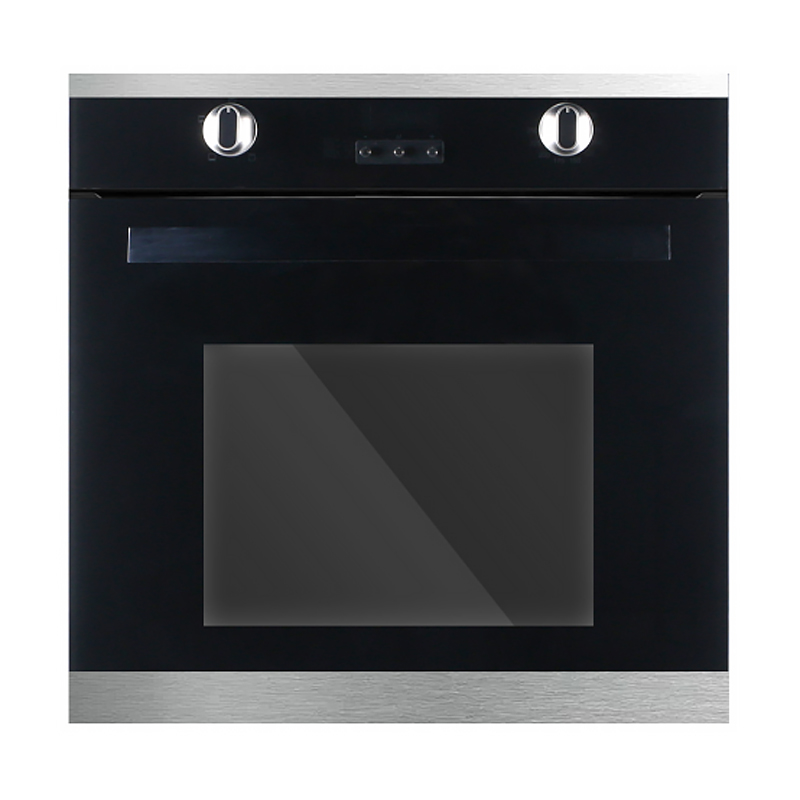 Wholesale K80A-DZ1 Dual Electronic Knob Oven Manufacturer, Factory - ShengZhou GShengZhou GeXiang Electric is China K80A-DZ1 Dual Electronic Knob Oven manufacturers and OEM & ODM factory,K80A-DZ1 Dual Electronic Knob ...View Product →
Poor Ventilation and Airflow
Blocked ventilation rarely creates smoke on its own, but it is the most common reason that otherwise normal smoke lingers, appears from the wrong place, or is accompanied by overheating. Every built-in electric oven needs a defined gap between the appliance body and the cabinet. If packaging, foil, or a carelessly placed pan blocks the vents, heat collects around the control unit and insulation.
Check these points in order:
- Confirm that the side and top clearances match the installation manual; most built-in ovens require at least 5 to 10 mm on the sides and more at the top.
- Make sure the front vent slots above the door are free of obstruction.
- Open a window or switch on the range hood during high-temperature bakes.
If the smoke exits from the rear or the sides instead of the top vents, treat airflow as the likely problem first. The exact requirements depend on the model, and our guide to clearance space around an electric wall oven explains the numbers for common built-in configurations.
Smoke During the Self-Cleaning Cycle
Heavy smoke during a self-cleaning or pyrolytic cycle is common and usually expected, because the oven deliberately heats residue to roughly 400 to 500 °C to convert it to ash. Under that heat, even tiny amounts of leftover food carbonize almost instantly, producing visible smoke. The system is working as intended, but the smoke is alarming if the cavity was heavily soiled.
To keep the cycle safe and minimize smoke:
- Scrape off large spills and chunks of food before starting
- Remove trays, racks, and any non-stick accessories from the cavity
- Open windows and run the extractor hood during the cycle
- Run the cycle when the kitchen is unoccupied, with smoke alarms nearby
If the cycle sets off smoke alarms every time even after a scrape-down, check the door seal for wear; a deteriorated gasket lets smoke escape into the room faster than the ventilation system can remove it.
Cause-and-Action Reference Table
The table below summarizes the main causes, the signs that point to each one, and the correct response, including the self-cleaning cycle as a special case of burnt residue.
| Cause | Typical signs | Action |
|---|---|---|
| New-oven residue | Light smoke, oily or metallic smell, first 1-3 uses | Run empty at 200 °C for 30 minutes, then wipe the interior |
| Grease and food debris | Smoke smells like recent cooking, light sizzle | Deep-clean the cavity, lower element area, and door glass |
| Worn or faulty element | Sparks, acrid electrical smell, uneven glow | Stop use; replace the element or call a technician |
| Blocked ventilation | Smoke from the rear or sides, oven runs unusually hot | Restore manufacturer clearance and clear all vents |
| Self-cleaning cycle | Heavy smoke only during the clean cycle | Remove loose debris, ventilate, and inspect the door seal |
Frequently Asked Questions
Is it normal for a brand-new electric oven to smoke?
Yes. Protective oils used during manufacturing burn off in the first few uses. Run the oven empty at 200 °C for 30 minutes, ventilate the kitchen, and the smoke should stop within that cycle.
Why does my electric oven smoke when baking but not when grilling?
Baking activates the lower element and the oven floor, where drips and crumbs collect. The top grill element usually stays cleaner. Clean the floor and lower element, and the smoke during baking normally disappears.
Can I keep using the oven if it smokes a little?
Only if the smoke is light, smells like food, and the cause is confirmed as residue. If it smells electrical, if you see sparks, or if the smoke continues after a complete clean, turn the oven off and book an inspection before the next use.
How often should I clean the oven to prevent smoking?
Wipe up spills after every cool-down, and deep-clean the cavity every two to three months for average home use. Households that roast or bake several times a week should deep-clean monthly.
The Bottom Line
Electric oven smoke is rarely mysterious. A new oven burns off manufacturing residue; a used oven burns off food residue; and occasionally an element fails or airflow is blocked. The first case needs only ventilation, the second needs cleaning, and the third and fourth need attention before the next use. If you are comparing built-in models and want an oven designed with robust elements and proper airflow in mind, our 130 L touch-screen electric wall oven is a practical starting point: it pairs a dual-fan system with reinforced elements, so the only smoke you are likely to see is the harmless first-use burn-off.