中文简体
 Español
 عربى
Premium kitchens keep specifying professional-style gas ranges because two things decide whether a range feels worth its price every single day: how the burners respond under a pan, and how evenly the oven bakes. A pro-style gas range delivers both, with visible flame adjustment from a hard rolling boil down to a low simmer, plus a convection cavity large enough to roast a whole bird and bake two trays of pastry at once. Styling, screens and badges sell an appliance in a showroom; heat control and cavity volume are what justify the premium in the kitchen.
A luxury gas range, defined practically, is a 30- to 48-inch range built around sealed brass burners in roughly the 15,000-22,000 BTU band, a genuine low simmer, continuous cast-iron grates, and a convection oven of about 3.5 to 5.0 cubic feet, or roughly 80 to 130 litres. The sections below explain where that definition comes from, which trends are shaping current specifications, and what a buyer or specifier should verify before money changes hands.
Content
- What Separates a Luxury Gas Range From a Standard Model
- The Trends Premium Kitchens Are Specifying Right Now
- Why Professional Cooking Equipment Wins in Real Cooking
- Dual Fuel and the Hybrid Kitchen
- Installation, Ventilation, and the Numbers That Decide a Project
- What to Verify Before You Specify or Buy
- Frequently Asked Questions About Luxury Gas Ranges
- The Bottom Line
What Separates a Luxury Gas Range From a Standard Model
The gap is engineering, not trim. Three subsystems carry almost all of the performance difference: burner architecture, oven behaviour, and the frame that holds them together.
Burner architecture
Sealed brass burners with a wide turndown ratio are the clearest marker of a premium range. A mainstream freestanding range typically tops out around 9,000-12,000 BTU and idles near 2,000-3,000 BTU; a luxury burner set pairs a 15,000-22,000 BTU power burner with a simmer ring that holds below 1,000 BTU. That spread, often better than 20:1, is what lets a cook melt chocolate, reduce a stock or hold a sauce without a diffuser plate. Brass also resists corrosion and keeps its shape better than stamped aluminium, which matters when a burner runs several hours a day.
Oven behaviour
Convection is the other non-negotiable. A reversing or third-element fan moves air through the cavity so a sheet pan browns evenly across its full width, and it usually cuts preheat time to roughly 6-10 minutes against 12-15 minutes for a static oven. Premium models push further with steam-assist injection for crusty bread, a proof setting, temperature probes and self-clean cycles. Cavity size is the number buyers underestimate: an 80-litre oven fits a 30-inch cabinet and a family roast, while a 130-litre dual-fan oven is what a serious baker or small catering operation needs.
Frame, finish and serviceability
Frame quality is invisible until year seven. Thicker stainless panels, welded rather than screwed cavity seams, damped hinges and full-extension telescopic racks all reduce the rattle and heat loss that appear in cheaper units. Serviceability belongs to the same story: a luxury range is expected to keep working for a decade, which means replaceable burner caps, igniters, fans and door gaskets rather than a sealed assembly that has to be scrapped.
The Trends Premium Kitchens Are Specifying Right Now
Six shifts show up repeatedly in high-end kitchen plans, and each one has a concrete check on the datasheet.
- Dual-fuel hybrids dominate. Gas burners on top, electric convection below: cooks keep flame control and gain more even baking plus a faster, cleaner self-clean cycle.
- Turndown beats headline BTU. Buyers now compare the lowest simmer as closely as the highest output; a 22,000 BTU burner is only useful next to a 600 BTU ring.
- Steam and convection converge. Steam-assist ovens, combination steam-baking cavities and dedicated pizza settings are moving from commercial kitchens into residential suites.
- Wider formats and integrated griddles. 36-inch and 48-inch slide-in ranges with six burners, a griddle or a grill section are replacing the 30-inch default in larger kitchens.
- Digital control and probes. Touch colour screens, digital timers, preset programmes and meat probes now sit on the range itself rather than only on wall ovens.
- Coordinated suites and ventilation. Ranges are specified together with a matching hood, and hood airflow is sized to the range's total output rather than to cabinet width.
Why Professional Cooking Equipment Wins in Real Cooking
Professional cooking equipment wins because it removes the three compromises home cooks actually notice: waiting for heat, chasing hot spots, and guessing at temperatures. The table below shows how the common tiers differ in the specifications that decide day-to-day results.
| Specification | Entry-level freestanding gas range | Luxury gas range | Dual-fuel range |
|---|---|---|---|
| Top burner output | 9,000-12,000 BTU | 15,000-22,000 BTU | 15,000-22,000 BTU |
| Lowest simmer | About 2,000-3,000 BTU | 500-1,000 BTU | 500-1,000 BTU |
| Oven type and cavity | Static, 3.0-4.0 cu ft | Convection, 3.5-5.0 cu ft | Electric convection, 3.5-5.0 cu ft |
| Typical preheat | 12-15 minutes | 6-10 minutes | 5-8 minutes |
| Controls | Knobs only | Knobs, digital timer, probe | Digital presets, timer, probe |
| Hood airflow needed | 300-400 CFM | 600-1,200 CFM | 600-1,200 CFM |
Read the table as a buying filter. If a range cannot hold a low simmer, the oven cannot run a fan, and the hood cannot move 600 CFM or more, the premium price buys appearance rather than cooking capability.
Dual Fuel and the Hybrid Kitchen
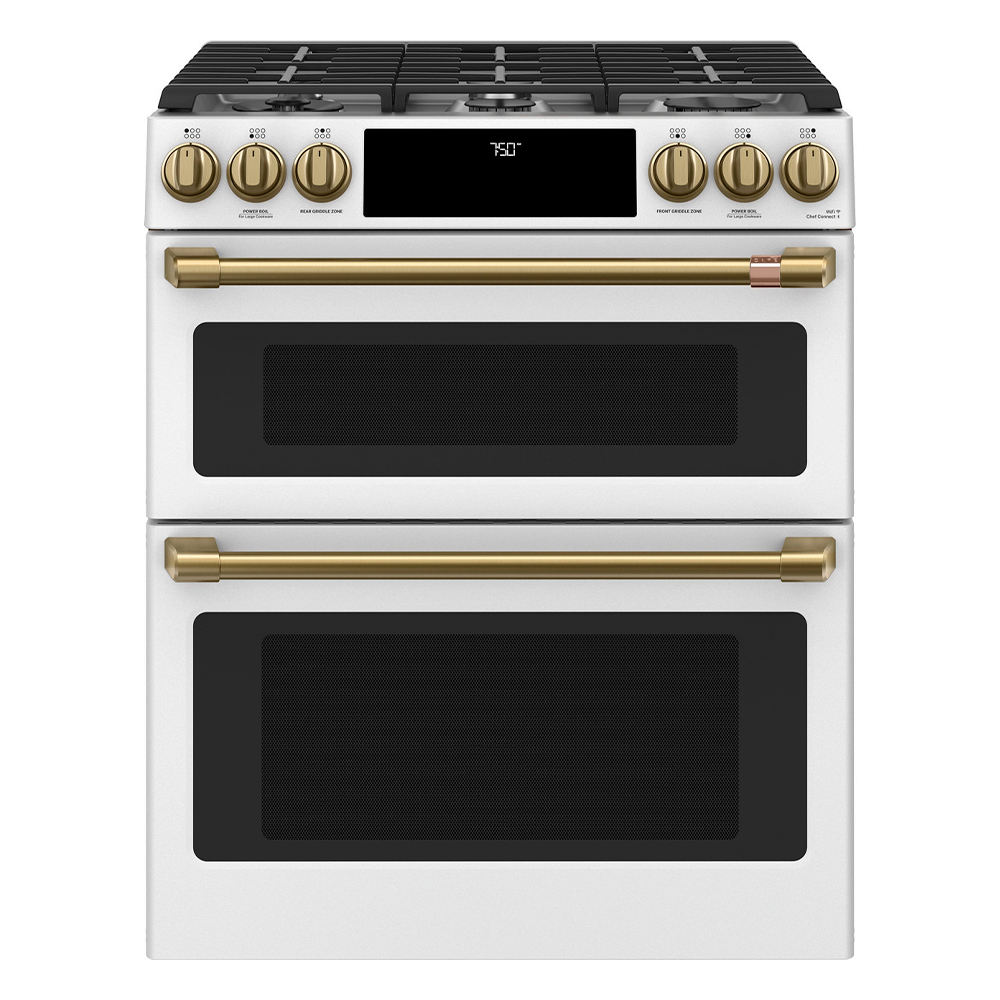
For most premium builds, a dual-fuel range with gas burners on top and an electric convection oven below is the safest single specification, because it satisfies both the cook who wants flame and the baker who wants even heat.
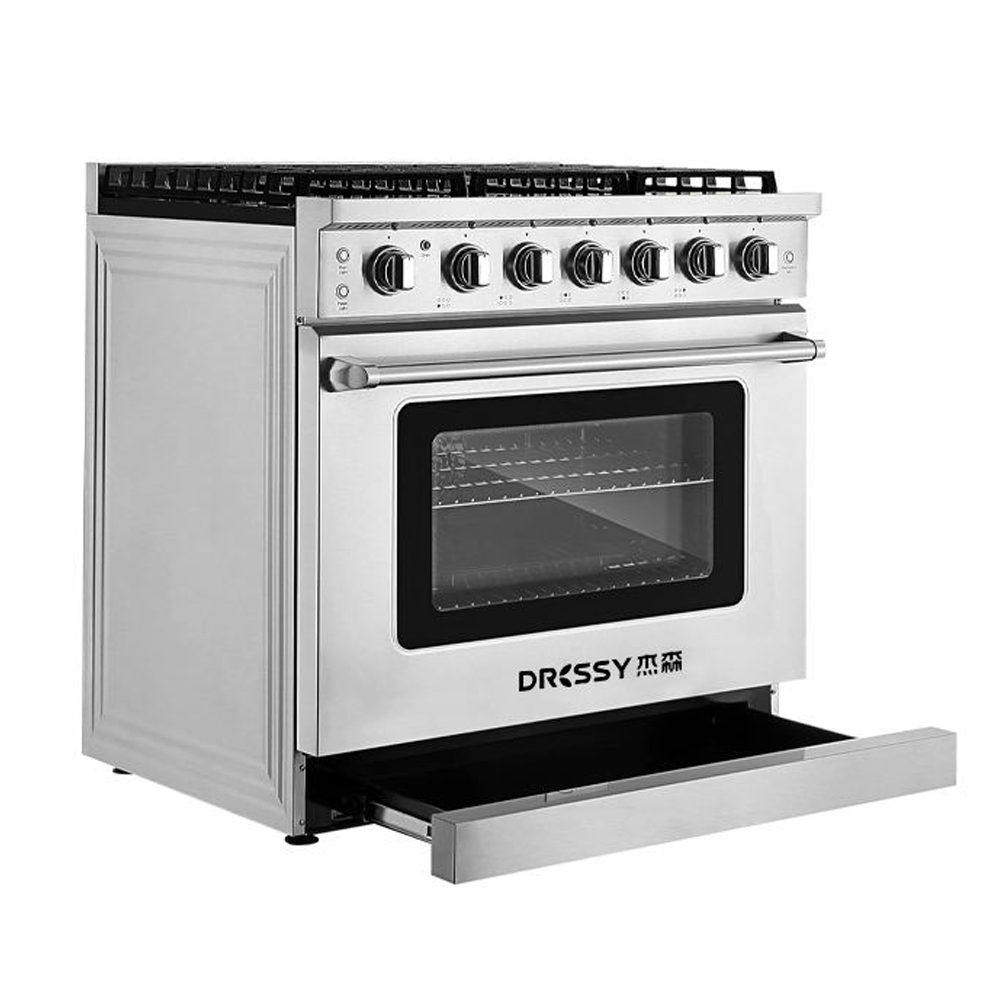
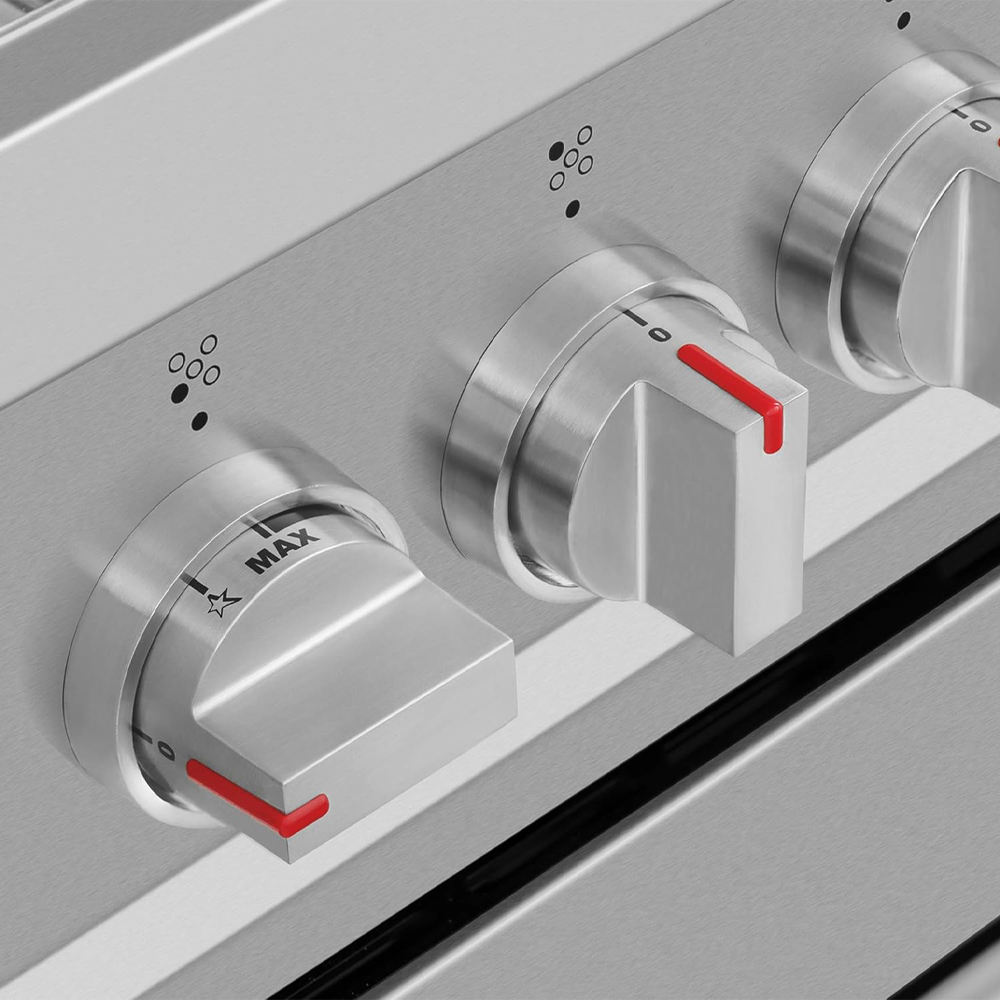 Six-Burner Gas Range with Integrated OvenA six-burner gas range with integrated oven, stainless steel and cast-iron build, and electronic ignition for convenient daily cooking.View Product →
A six-burner 36-inch configuration covers the majority of family kitchens: enough burners to run a sauce, a saute and a simmer at once, with an oven wide enough for a sheet pan and a roasting tin side by side. Where the plan allows more width, a 48-inch slide-in with digital timer control and a pizza-capable oven adds a griddle zone and a second cooking surface without a second appliance.
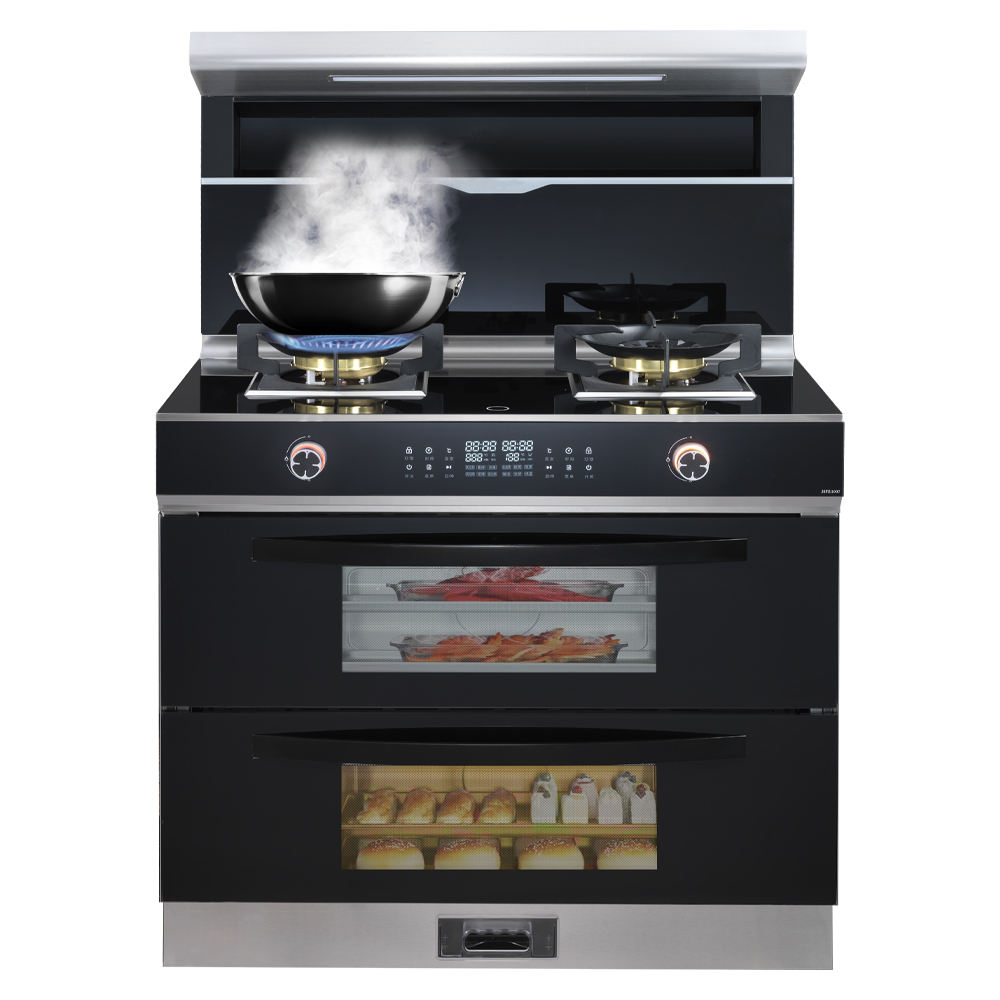
 Digital Timer Slide-In Gas Range with Pizza OvenAn electronic slide-in gas range with digital timer, pizza-capable oven, safety protections, and efficient heating for home or commercial kitchens.View Product →
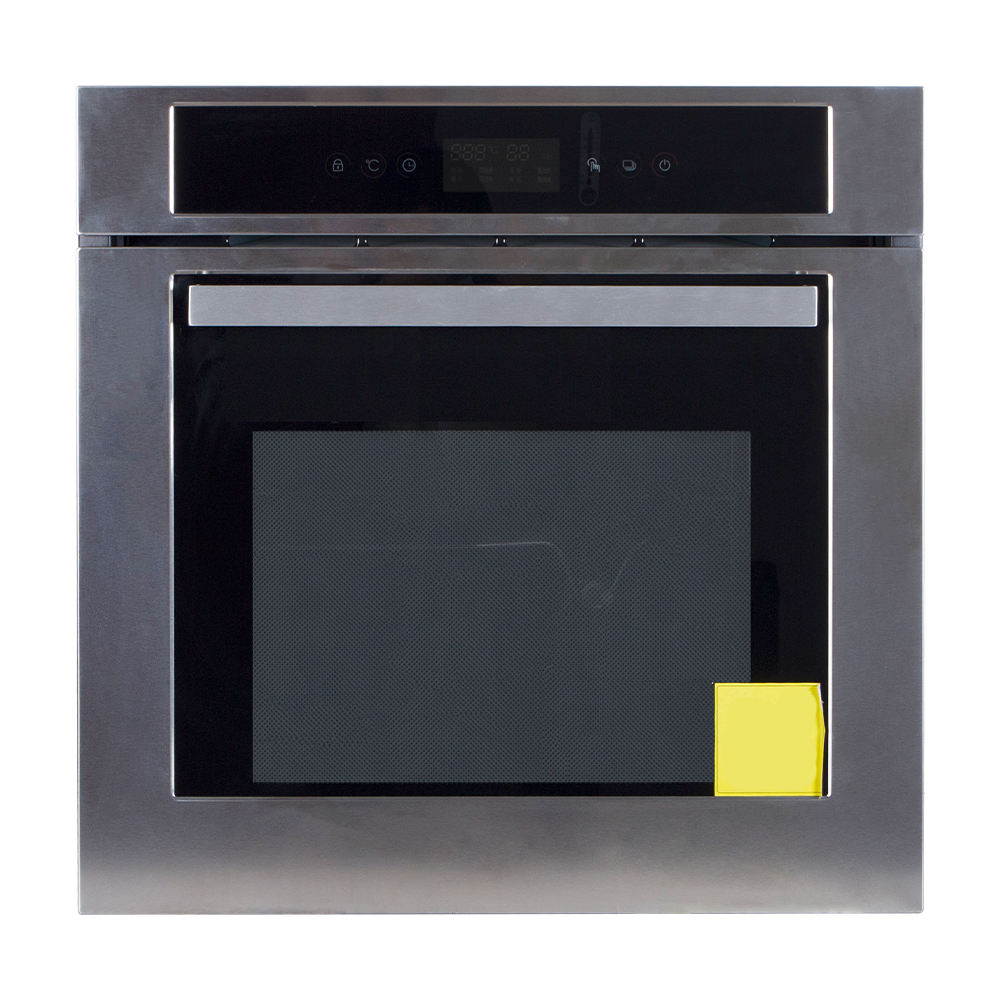
The alternative approach is a suite: a gas range or cooktop for the burners and a separate built-in electric wall oven for baking. That split is common in larger kitchens because it lifts the oven to eye level and frees the range for high-output cooking. A 130-litre dual-fan wall oven is a typical pairing, since two fans let two racks bake at once without swapping positions halfway through.
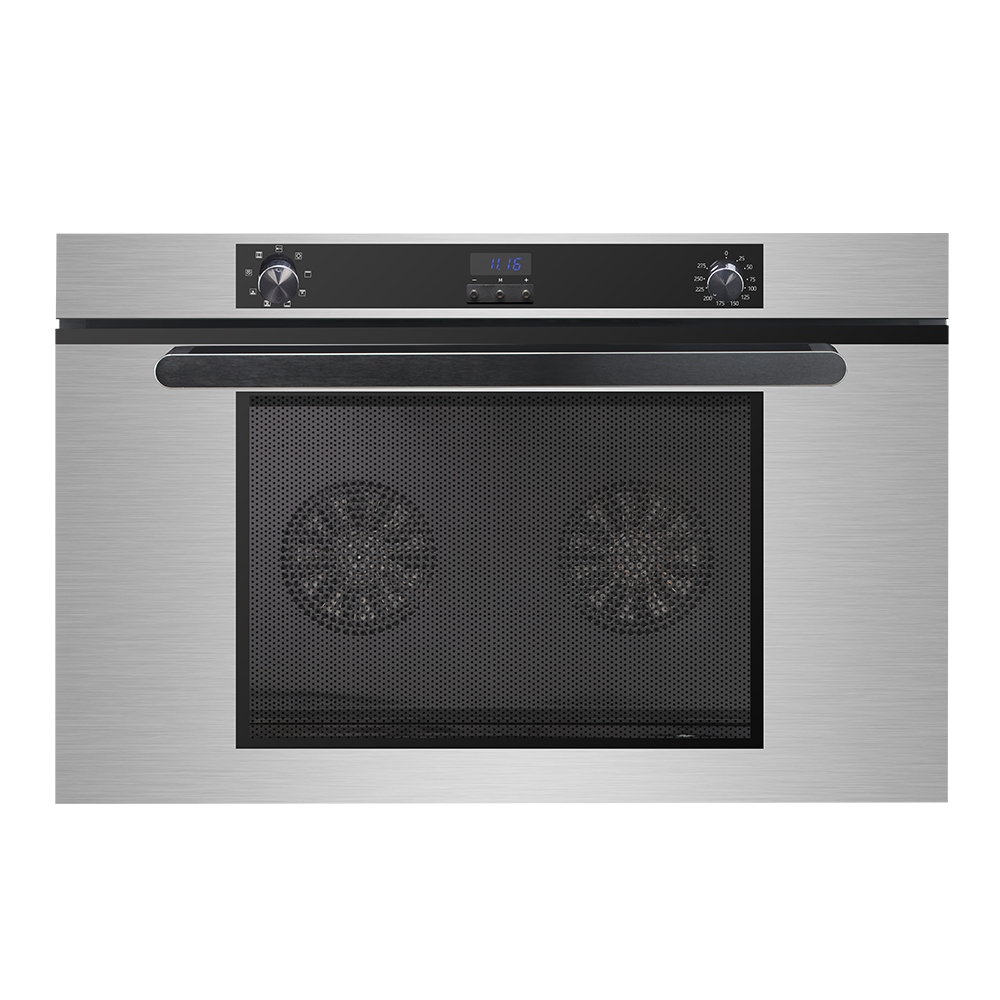 K126-900-DZ1 Dual Electronic Knob Electric Wall OvenA 126 L electric wall oven with dual electronic knobs, convection fan, seven heating modes, and rotisserie options for built-in kitchen suites.View Product →
Installation, Ventilation, and the Numbers That Decide a Project
Most luxury range problems on site are rough-in problems, not appliance problems. Check these five items before the cabinets are cut.
- Gas supply and type: a 1/2-inch connection is normal for 30- and 36-inch ranges, while 48-inch models with a griddle usually want 3/4 inch. Confirm natural gas or propane, and that the conversion kit is included.
- Electrical service: dual-fuel and steam models need a dedicated 240 V circuit, often 30-50 A, while an all-gas range may need only 120 V for ignition and controls.
- Clearance and stability: respect the stated side and rear clearance, keep the range out of the door swing, and always fit the anti-tip bracket.
- Ventilation: size the hood to total burner output. A 36-inch pro-style range typically wants 600-900 CFM; a 48-inch unit with a griddle can call for 900-1,200 CFM, plus make-up air in a tightly built house.
- Combustion safety: a burner needs airflow and a correctly adjusted flame. Spotting a gas leak by smell is basic household knowledge, and the warning signs are covered in this guide to identifying gas leakage risks on a gas range.
What to Verify Before You Specify or Buy
Treat the specification sheet as a filter, and the answer usually becomes obvious within five minutes of reading.
- Top and bottom burner output in BTU, plus the lowest simmer figure.
- Oven volume in litres or cubic feet, and whether racks are telescopic.
- Convection type: single fan, reversing fan or dual fan.
- Control set: knobs only, or knobs plus digital timer, presets and probe.
- Cleaning method: self-clean, steam-clean or manual.
- Certification for the destination market, along with voltage and plug standard.
- Spare parts, warranty length and local service support.
Project buyers should apply the same logic one level up: request burner turndown data, oven cavity drawings and hood airflow figures rather than photographs. If you are comparing formats across widths, it helps to browse a full luxury gas range line-up and filter by width, burner count and oven volume before asking for a quotation.
Frequently Asked Questions About Luxury Gas Ranges
It is worth it when you cook often and value control. The premium buys a wider turndown ratio, a true convection oven, heavier frames and parts that can be replaced. If the range is used twice a week, a mid-range model with convection and a decent simmer burner is the better value.
Does a professional-style range need more ventilation than a standard one?
Yes, because higher burner output produces more heat, moisture and grease. Size the hood to total BTU rather than to the width of the cabinet, and add make-up air where the kitchen is sealed tightly. Undersized extraction is the most common reason a premium range underperforms in daily use.
Can a 48-inch gas range fit a normal kitchen?
It fits when the layout allows roughly 48 inches of cut-out plus clearance, a 3/4-inch gas line and 900 CFM or more of extraction. In a compact kitchen, a 36-inch six-burner range with an eye-level wall oven usually delivers more usable capacity in less floor space.
Dual fuel or all gas, and how should oven capacity be compared?
Dual fuel suits bakers, all gas suits simplicity and sites without a 240 V circuit. Compare usable cavity volume rather than exterior size, then check rack count and whether a fan moves air across the full width of the oven.
The Bottom Line
Premium kitchens prefer professional cooking equipment because the specification matches how people actually cook: fast, adjustable heat on top, even convection below, and enough cavity space to finish a whole meal at once. In practice the choice narrows to a dual-fuel range for most homes, a 48-inch format where space allows, or a gas range paired with a separate wall oven for larger kitchens. Settle burner turndown, oven volume and hood airflow first, then pick the finish, which takes about five minutes.