中文简体
 Español
 عربى
Choosing a gas range comes down to five checks, and the order matters: confirm the fuel you have, natural gas or propane, measure the cutout your cabinets can accept, pick the burner layout that matches how you cook, size the oven to what you actually bake, and settle ventilation and clearances before the delivery truck arrives. Get those five right and the finish, trim, and badge become a matter of taste rather than risk.
A gas range, in plain terms, is one appliance that combines surface burners with one or two ovens and runs on piped natural gas or liquid propane. That is what separates it from a separate cooktop and wall oven, which need two cutouts, two feeds, and two trim kits.
Write these five figures down before you open a single spec sheet:
- Gas type, and where the shut-off valve sits relative to the cutout.
- Available width: 24, 30, 36, 48, or 60 inches.
- Cutout depth and clearance to the nearest side cabinet.
- Highest burner output you genuinely need.
- Ventilation you can install above the range.
Content
- Width First: Match the Range to the Cutout, Not the Other Way Around
- Burner Layout and BTU Ratings: Read the Spread, Not the Badge
- The Oven: Capacity, Convection, and the Dual-Fuel Question
- Clearances, Gas Supply, and Ventilation: The Installation Checks
- Budget Bands, Lead Time, and Sourcing Checks
- Frequently Asked Questions
Width First: Match the Range to the Cutout, Not the Other Way Around
Measure the opening first; the range width follows from it. A 30-inch range is the default in most homes, 36 inches buys a wider grate area and a larger oven, and 48 inches adds a second oven plus a griddle or charbroiler. Measure at the countertop and again at the floor, because cabinet runs are rarely parallel and a 29.9-inch body can still bind on a bowed base cabinet.
Depth is the second number people forget. Freestanding ranges typically run 25 to 27 inches deep excluding handles, while pro-style bodies often reach 27 to 29 inches and protrude past a standard 24-inch counter. If the range sits at the end of a run, check that the oven door and handle clear the wall, a door frame, or a drawer bank.
| Style | Typical widths | How it fits | Best for | Watch-outs |
|---|---|---|---|---|
| Freestanding | 24-30 in | Finished on both sides, slides between cabinets, controls at the front | Straight replacements, rental kitchens, tight budgets | A backguard may block a window; the body can sit proud of the counter |
| Slide-in | 30-36 in | No side panels, overlaps the countertop, no backguard | A built-in look without rebuilding cabinets | Cutout tolerance is tight; gaps may need a filler or trim kit |
| Pro-style or luxury | 36-48 in | Heavy stainless body, high-output burners, commercial-style grates | Open-plan kitchens and serious cooks | 200 lb or more, deeper body, larger hood, more ventilation |
| Dual fuel | 30-48 in | Gas burners with an electric oven | Bakers who want flame control and even oven heat | Needs both a gas line and a 240 V circuit |
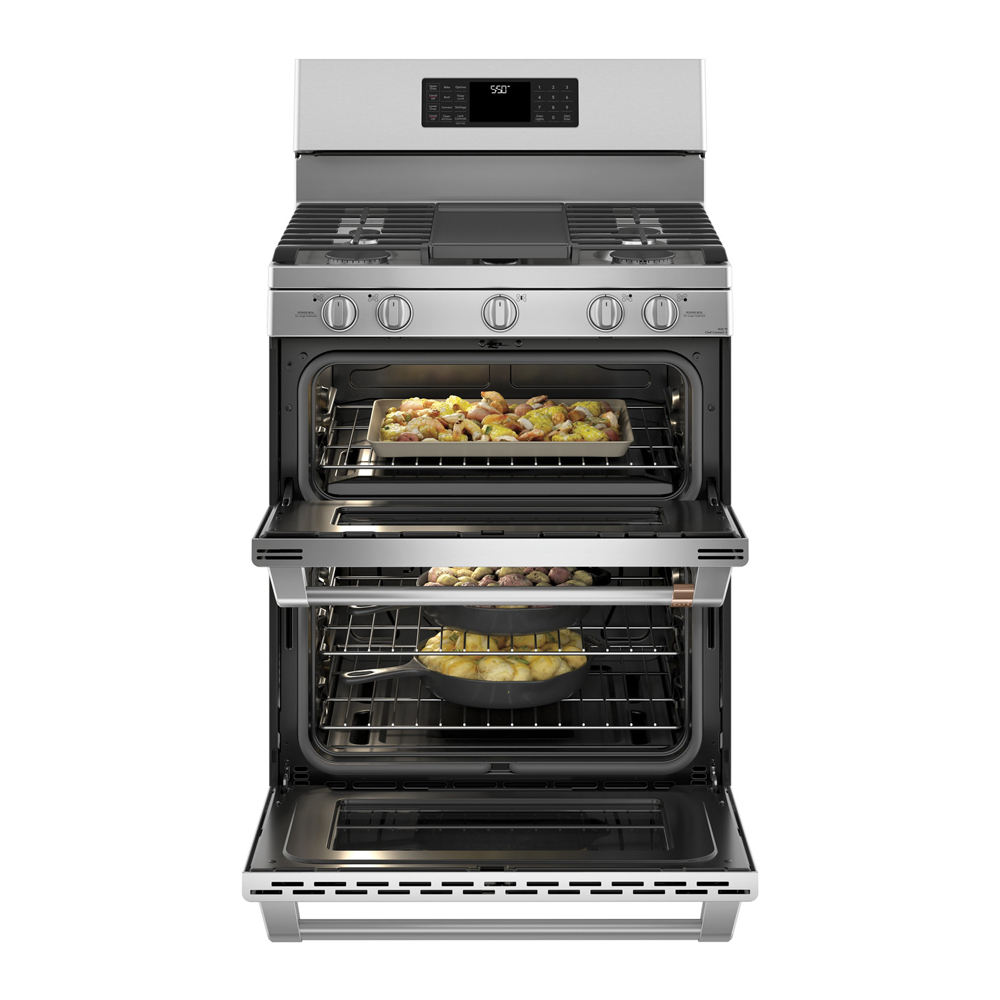
Where a second oven earns its footprint, a 48-inch freestanding model with six burners and a built-in oven and grill covers roasting and griddle work in one unit.
 48-Inch Freestanding Gas Range with Oven, Grill, and Digital TimerA 48-inch freestanding gas range combining a six-burner cooktop, oven, and grill, with digital timing control for roasting, griddle work, and varied stovetop cooking.View Product →
Burner Layout and BTU Ratings: Read the Spread, Not the Badge
The useful number is not the highest BTU on the label but the spread between the lowest simmer and the hottest sear. One 18,000 BTU power burner paired with three 9,000 BTU burners usually cooks better day to day than four identical 15,000 BTU burners, because most meals need gentle heat rather than maximum flame.
| Burner role | Typical output | What it is for |
|---|---|---|
| Simmer | 500-1,500 BTU | Sauces, chocolate, rice, melting butter without scorching |
| Everyday | 8,000-12,000 BTU | Eggs, pasta, vegetables, most weeknight cooking |
| Power or sear | 15,000-18,000 BTU | Steak, stir-fry, large pots of water, cast-iron searing |
| Dual-ring or wok | 18,000-25,000 BTU | Wok cooking on the outer ring with a low simmer at the centre |
Three details separate a good burner from a frustrating one. First, look for a dedicated simmer setting below 1,500 BTU, since a 15,000 BTU burner turned to its lowest point often still scorches a bechamel. Second, sealed burners are easier to wipe clean, while open burners handle spills more forgivingly and are common on pro-style models. Third, continuous cast-iron grates let you slide a heavy pot between burners without lifting it, which matters more in daily use than most buyers expect. Confirm ignition as well: electronic ignition with auto-reignition relights a burner after a boil-over or a draft puts out the flame.
The Oven: Capacity, Convection, and the Dual-Fuel Question
Size the oven by the largest thing you bake, then decide how the heat is delivered. A 30-inch range usually offers 4.8 to 5.8 cubic feet of usable space; a 36-inch model moves that to roughly 5.5 to 6.5 cubic feet; a 48-inch dual-oven range splits the space into a main cavity near 4 cubic feet plus a smaller second oven. Two half-sheet pans side by side, a 16-inch pizza, or a 20-pound turkey are the practical tests.
Convection is worth the upgrade if you bake often, but only true convection, with a third heating element wrapped around the fan, gives consistent results across multiple racks. Air movement borrowed from the existing elements alone browns unevenly in the corners.
Dual fuel, meaning gas burners on top and an electric oven below, is the compromise many bakers choose: instant flame control at the cooktop, steady dry heat for cakes and bread. The trade-off is installation, because dual fuel needs a gas connection and a 240 V circuit planned in advance.
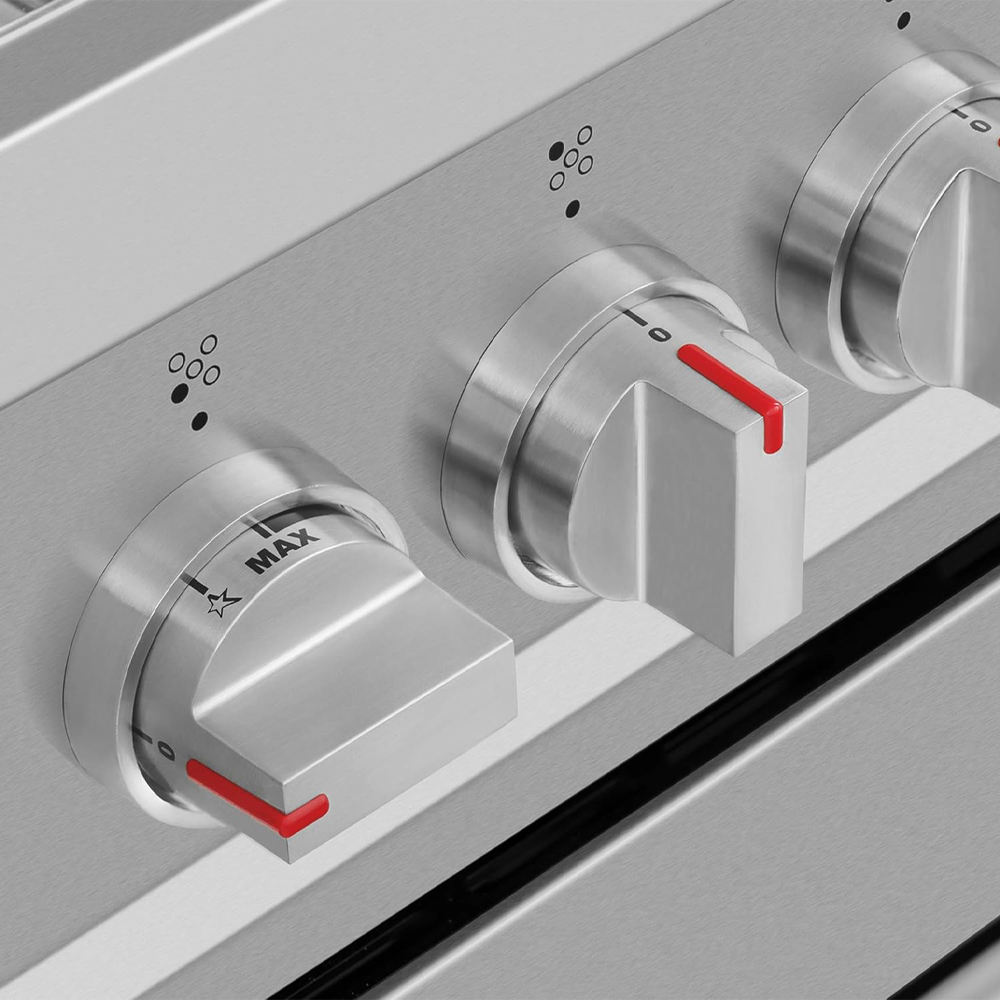 Kitchen Gas Range with Oven and Six-Burner CooktopA six-burner dual-fuel-category gas range with oven, stainless steel and cast iron construction, electronic ignition, and clearance and ventilation planning.View Product →
Clearances, Gas Supply, and Ventilation: The Installation Checks
Clearance and ventilation rules decide whether a range can be installed at all, so settle them before you order. Requirements vary by model and local code, and the manufacturer's installation manual always overrules a rule of thumb.
- Vertical clearance: most residential gas ranges call for a hood or over-the-range unit at least 30 inches above the cooking surface, with more for high-output burners.
- Side clearance: zero inches to a non-combustible surface is common, but a combustible side wall or tall cabinet usually needs a few inches or a heat shield.
- Back clearance: allow room for the gas connector and, on a combustible wall, a small standoff.
- Gas connection: a 1/2-inch supply line with an accessible shut-off valve and a certified flexible connector, never reused from the old appliance.
- Ventilation: match airflow to burner output. A 30,000 BTU cooktop needs far less than a 60,000 BTU pro-style top, and any hood above roughly 400 CFM may require make-up air to avoid back-drafting.
Leaks are the one failure you cannot fix after the fact. A soapy-water test on every joint takes two minutes, and knowing how to identify the risk of a gas leak by smell is worth doing before the first meal is cooked.
Budget Bands, Lead Time, and Sourcing Checks
Set a budget by band, not by badge. Entry-level 30-inch gas ranges with basic sealed burners sit in the low hundreds of dollars; mid-range slide-in and convection models run several hundred to around two thousand; pro-style and 48-inch dual-oven ranges climb well beyond that, and the hood, gas line, and electrical work add a meaningful share on top.
If you are buying for a project, a rental portfolio, or a private-label line rather than a single kitchen, the checks change:
- Specify gas type and orifice for the destination market, plus voltage and frequency for ignition and oven: 120 V and 60 Hz in North America, 220-240 V and 50 Hz in many other regions.
- Confirm the certification the market requires before tooling is committed, not after.
- Ask about lead time and spare parts, including burner caps, grates, thermocouples, and door hinges.
- Inspect a finished sample for door alignment, knob feel, and grate flatness, the details that generate warranty calls.
Factories that build their own ovens and grills generally offer more flexibility on burner layout, oven size, and trim than trading companies do. Shengzhou GeXiang, which produces gas ranges alongside ovens and outdoor grills, presented its premium kitchen lineups at the 2025 IBS show in Las Vegas, a sign that ranges are being specified for North American kitchens as well as export markets.
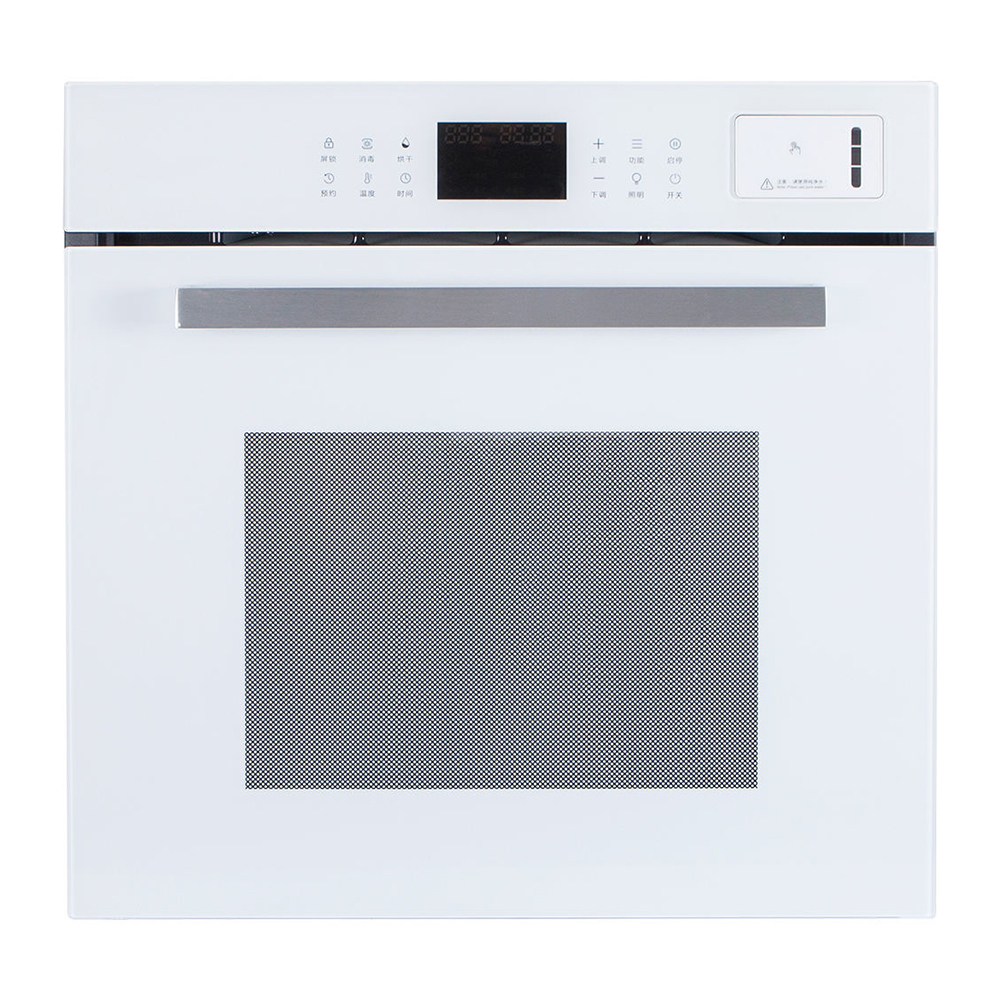
 Digital Timer Slide-In Gas Range with Oven for PizzaAn electronically controlled slide-in gas range with oven, digital timer, automatic shut-off, and large-capacity oven for pizza and daily cooking.View Product →
Frequently Asked Questions
Is a gas range better than an induction range for a kitchen project?
Gas wins on responsiveness and keeps working during a power outage; induction boils faster, cleans more easily, and needs no gas line. If the building already has a gas riser, gas is usually the cheaper installation; if it does not, running a line often costs more than the cooking difference is worth.
What size gas range fits a standard 30-inch opening?
A range listed as 30 inches is built for a 30-inch opening, but check the exact body width, since many measure 29.8 to 30 inches, and leave a quarter inch of play per side. Slide-in models often need a slightly wider cutout than freestanding ones.
Do I need a conversion kit to run a gas range on propane?
Yes, in most cases. Natural gas and propane burn at different pressures, so the range needs the correct orifices and a regulator adjustment. Some models ship with both jet sets; others sell the kit separately, and a licensed technician should make the change.
How much ventilation does a gas range need?
Enough to capture smoke, grease, and combustion by-products, matched to total burner output. A ducted hood rated around 300 to 600 CFM suits most residential ranges; high-output pro-style ranges need more, and recirculating ductless hoods are a poor match for heavy gas cooking.
Can a gas range work in a small kitchen?
Yes, if the clearances hold. A 24-inch range, a shallow-depth hood, and front controls avoid the reach-over problem that backguard models create under low cabinets. Confirm door swing and drawer clearance before buying.
Buy the range that fits your gas supply, cutout, burner habits, oven needs, and ventilation, in that order, and the rest is styling. Measure twice, confirm fuel type and clearance in the installation manual, and treat the hood and gas work as part of the appliance cost rather than an extra. Do that, and the range you install will still feel right five years into the kitchen.