中文简体
中文简体 Español
 عربى
عربىAn electric wall oven is the most predictable baking appliance you can add to a modern kitchen, but only when it matches the space built into your cabinets and the volume of food you actually cook. For most homes, the best configuration is a 30-inch built-in electric wall oven with a true convection fan, at least 60 liters of usable capacity, a self-cleaning cycle that fits your maintenance habit, and a dedicated 240-volt circuit at the installation point. If one of those four conditions is missing, every other feature becomes secondary.
Content
- Why a Built-In Electric Wall Oven Works Better in a Modern Kitchen
- Start with the Cutout, Then Capacity
- Single or Double Oven: Which One Fits Your Cooking Routine?
- Compare Heating Modes, Not Just Preset Dishes
- Cleaning and Safety: The Features You Live With
- Installation Requirements: Power, Clearances, and Cabinet Prep
- Common Mistakes to Avoid When Buying an Electric Wall Oven
- FAQs
Why a Built-In Electric Wall Oven Works Better in a Modern Kitchen
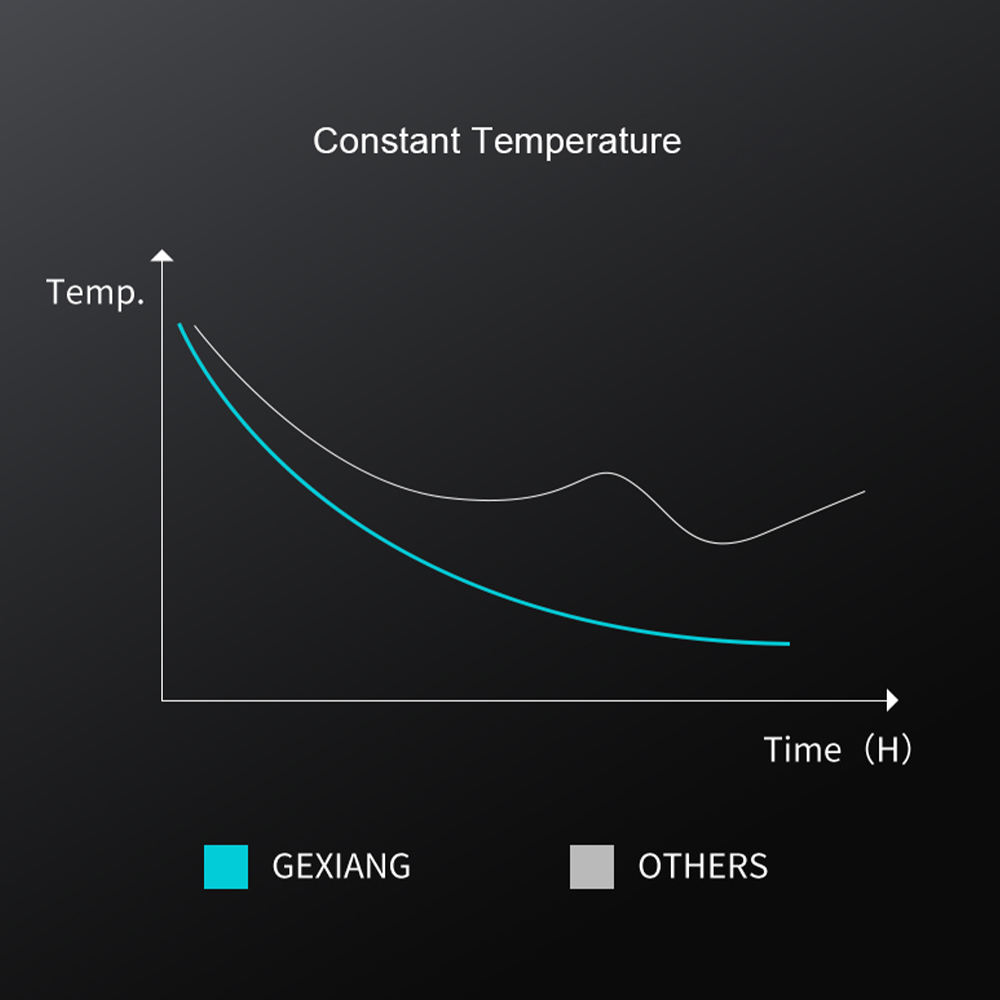
Electric wall ovens keep the cavity temperature more stable than freestanding ranges because the heating elements sit above and below the food, and a convection fan keeps hot air moving in a predictable loop. Built-in installation also separates the cooking surface from the oven, so you can run a slow roast in the oven while using every burner on the cooktop without crowding the workspace.
The practical impact: consistent baking results, reclaimed floor space, and an eye-level loading height. For households that bake often, roast in volume, or host regular gatherings, the built-in electric wall oven is a better platform than a range.
- Temperature stability: electric elements respond precisely to thermostat feedback, reducing hot and cold spots.
- Space efficiency: the oven shares the cabinet line with the rest of the kitchen instead of occupying floor space.
- Flexible height: you can position the oven so the top rack sits at a comfortable reach.
Start with the Cutout, Then Capacity
Measure the width, height, and depth of the cabinet opening before comparing any models. The opening decides what can fit, and the interior volume decides how much food you can cook in one session.
Most modern wall oven cutouts use a 24-inch or 30-inch width. A 24-inch opening usually pairs with a 45–60 liter cavity, while a 30-inch opening can host anything from 60 to 130 liters depending on oven height and cavity levels. If you cook for three or more people, choose a 30-inch model with at least 60 liters.
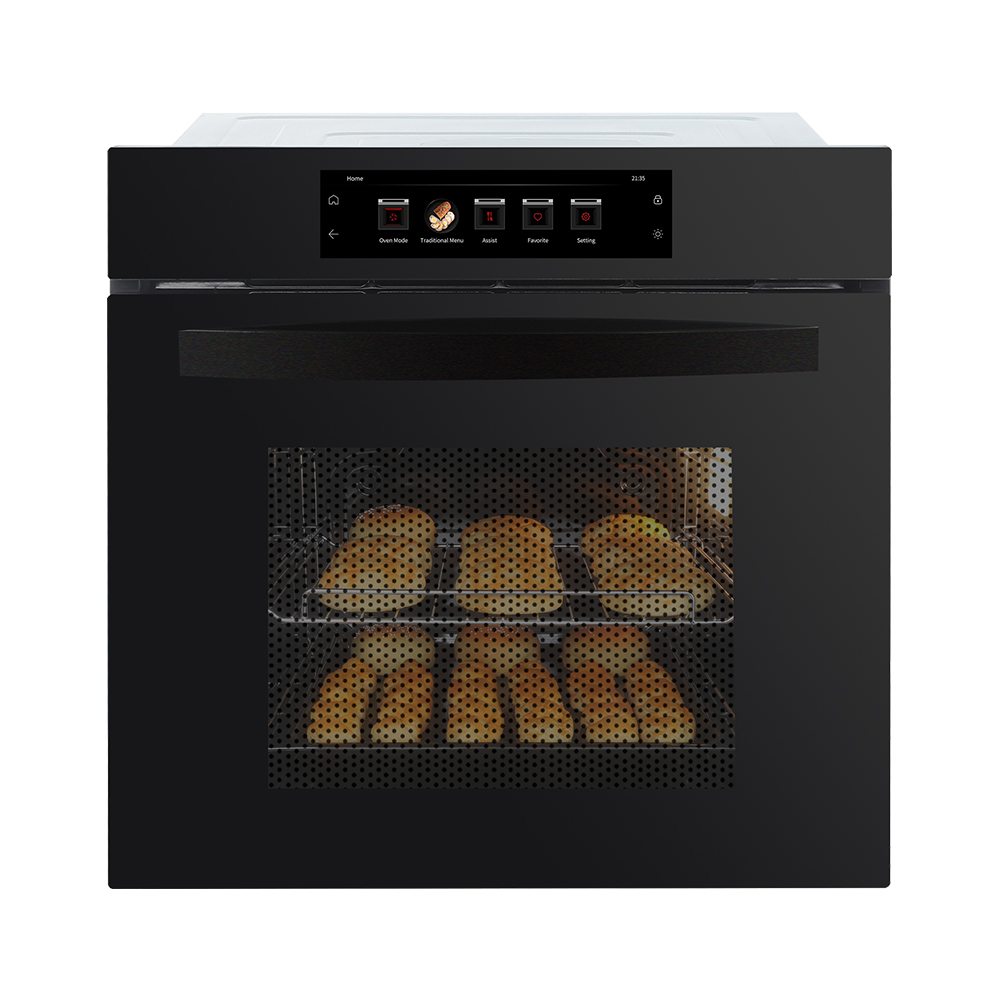
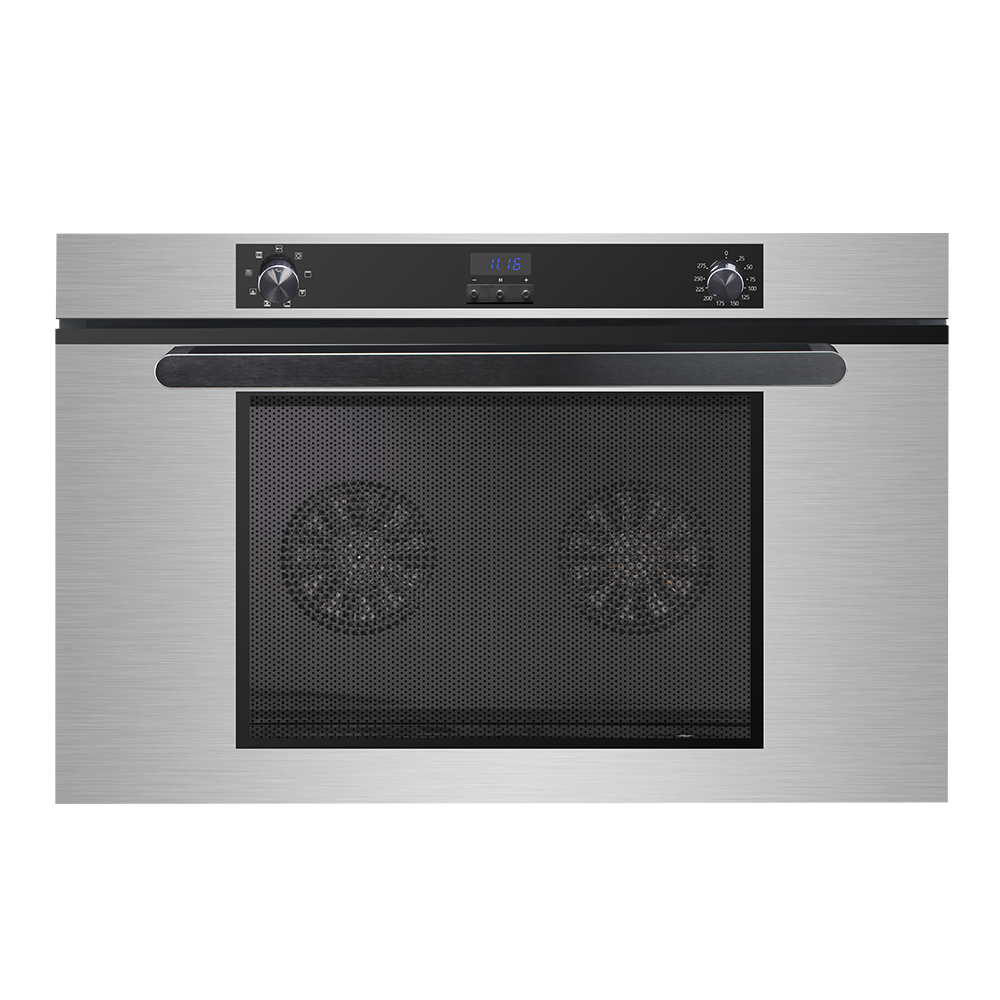 126L Dual Electronic Knob Wall Oven with Convection and RotisserieThis 126-liter wall oven offers a large usable cavity for big roasters and half-sheet trays, plus seven heating modes including convection and rotisserie. Its dual electronic knobs and black enamel liner suit households cooking for crowds.View Product →
Capacity is not just liters; it is usable rack area. A large turkey, a deep lasagna pan, and a half-sheet tray each have their own footprint. Check that the interior height accepts your tallest roaster. For households that cook for crowds, a 130-liter dual-fan wall oven is the closest thing to a commercial bake chamber in a residential cabinet. The table below gives a realistic starting range, and you can cross-check it with our detailed electric wall oven capacity guide.
| Household type | Recommended capacity | Typical width | What it handles comfortably |
|---|---|---|---|
| 1–2 people | 45–60 L | 24-inch | A 3–5 kg chicken, a pizza, one standard baking sheet |
| 3–4 people | 60–80 L | 30-inch | Two trays of cookies, a roast, a casserole plus a side |
| 5+ people or frequent entertaining | 80–130 L | 30-inch or double | Large roasts, multiple trays, full holiday meals |
Single or Double Oven: Which One Fits Your Cooking Routine?
A single wall oven is enough for most families; a double wall oven earns its cost only when you regularly bake and cook a main dish at the same time, or when you entertain with more than one hot dish. That conclusion applies to energy use, installation effort, and budget.
A single 60–80-liter oven covers the daily round of roasting, baking, and reheating. It preheats faster than a double unit because there is less air volume to heat. A double oven gives you two independent cavities, so you can bake at 190 °C in one and keep a dish warm at 70 °C in the other without opening the hot cavity.
If you prefer a single oven with modern digital control, an 80-liter touch-screen model with smart presets makes daily operation simpler. But the structural choice remains: one cavity or two. You can see the deeper reasoning in our single versus double electric wall oven comparison, but the short version is that double ovens add flexibility at the cost of more energy, more trim height, and a taller cutout.
| Consideration | Single oven | Double oven |
|---|---|---|
| Total capacity | 60–80 L | Usually 100–130 L combined |
| Energy use | Lower | Higher if both cavities run |
| Installation | Fits a standard single cutout | Needs a taller cutout or stacked cabinet |
| Best for | Daily baking and roasting | Baking and cooking simultaneously |
| Purchase and wiring cost | Lower | Higher, sometimes a second circuit |
Compare Heating Modes, Not Just Preset Dishes
Focus on cooking modes that change real results — true convection, a capable broil, and steam assistance — rather than preset dishes that only adjust time and temperature. These are the modes you feel every week.
True convection uses a third heating element near the rear fan, so hot air reaches all racks evenly. That is different from a fan-assisted bake, which simply moves air from the existing elements. For biscuits, pastries, and anything that needs even browning, true convection is the feature that matters most.
- True convection with a rear ring element
- Broil power sufficient for melting cheese and gratinating toppings
- Steam bake or full steam mode for bread, bagels, and crispy crusts
- Slow roast or dehydrate mode if you dry herbs, fruits, or jerky
- Keep-warm mode that holds 60–80 °C without overcooking
 Built-in Steam Baking Oven for Crisp Crusts and Moist CrumbThis steam-assisted oven adds moisture during baking, helping bread and pizza achieve a crispy exterior while staying soft inside. With easy-clean parts and intelligent controls, it is a practical choice for home bakers seeking professional-style results.View Product →
For bread bakers, a built-in steam baking oven is worth serious consideration. Steam forms a thin moisture layer around the dough, which delays crust setting and gives a more open, chewy crumb. Even if you bake only once or twice a week, the difference in bread quality is noticeable.
Cleaning and Safety: The Features You Live With
The cleaning system is a weekly decision, not an occasional extra. Pyrolytic self-cleaning burns off grease at roughly 500 °C and is the most thorough option; steam cleaning is gentler and faster but only handles light spills. Choose pyrolytic if you roast meat frequently or bake at high temperatures; choose steam clean if you mainly bake on paper-lined trays.
Safety features matter more with wall ovens because the appliance sits at chest or eye level, where children can reach the door more easily.
- Cool-touch door glass
- Control panel lock for young children
- Automatic shut-off after a set idle period
- Door interlock during pyrolytic cleaning
- Hidden heating elements that reduce burn risk during wiping
- Temperature limit sensors that prevent overheat cycles
Installation Requirements: Power, Clearances, and Cabinet Prep
Before you buy, confirm three numbers: circuit voltage and amperage, cutout width and height, and side clearance for ventilation and service access. If any of these is wrong, the oven cannot be installed safely.
Most built-in electric wall ovens require a dedicated 240-volt circuit rated at 30 to 50 amps. A 30-amp circuit handles smaller ovens, while large-capacity or double models may need 40–50 amps. Never share the circuit with a cooktop or an outlet; the load is meant to be isolated.
For the cutout, measure the opening in the cabinet, not the body of the old oven. Walls settle over time, so measure at the top, middle, and bottom. A typical 30-inch opening is about 28.5 inches wide by 27.5 inches high by 23.5 inches deep, but newer models can need slightly different depth for the rear trim. Check the manufacturer's spec sheet before ordering.
Leave at least 0.5 to 1 inch of side and top clearance for heat dissipation and for a technician to pull the unit forward. For loading safety, position the oven so the top rack is around 32–36 inches above the floor; that places the upper cavity at a comfortable angle for lifting hot pans.
Common Mistakes to Avoid When Buying an Electric Wall Oven
- Buying before measuring the cabinet cutout in three places.
- Ignoring the electrical circuit; a large oven will trip an undersized 30-amp breaker under full load.
- Choosing a cavity too small for the largest pan you use.
- Assuming every convection system is true convection.
- Overlooking the door swing in a narrow kitchen.
- Selecting a glossy finish before verifying cleaning and service access.
FAQs
- What size electric wall oven do I need? A 30-inch wide model with 60–80 liters of capacity suits most families. If you entertain often, move to 80–130 liters or a double oven.
- Can a 24-inch electric wall oven fit in a standard cabinet? Yes, but the range of models is smaller and capacity drops to about 45–60 liters. If you have the option to widen the opening, a 30-inch model offers more flexibility.
- Does an electric wall oven need its own circuit? Yes. A dedicated 240-volt circuit, typically 30–50 amps, is required. Sharing the circuit almost always causes breaker trips.
- Which is better: steam clean or pyrolytic? Pyrolytic removes heavy baked-on grease; steam clean is faster and uses less power for light spills. Your cooking style should decide.
- Are electric wall ovens more energy-efficient than gas wall ovens? Electric models convert more of the input energy into usable heat in the cavity, but running cost still depends on the price of electricity versus gas in your area.