中文简体
中文简体 Español
 عربى
عربىBuilt-in electric ovens improve both kitchen design and cooking efficiency in one move: they remove the bulky freestanding range from the floor, blend into cabinet lines, and use electric heating with convection airflow to cook faster and more evenly. For a renovation, that means a 76 cm floor slot opens up for storage, the oven face sits flush with the door fronts, and a dedicated baking cavity replaces the compromises of a combined range. Here is what you can expect, measured against the alternatives.
Content
What Is a Built-In Electric Oven?
A built-in electric oven, commonly called an electric wall oven, is an oven that slides into a prepared cabinet opening and operates on electrical heating elements instead of gas. It has no cooktop attached, no legs, and sits either at eye level in a tall appliance column, beneath a counter, or stacked with a second oven.
Three characteristics separate it from freestanding equipment:
- Design flexibility. The oven becomes part of the cabinetry, so you choose its height, stack it with a companion unit, and carry one consistent material language across the kitchen.
- Heat delivery. Elements above and below the cavity are supported by a convection fan that keeps air moving, resulting in even browning and a stable temperature across the whole rack.
- Control accuracy. Digital thermostats in modern electric ovens hold the setpoint within a few degrees, which is essential for pastry, proofing, and low-temperature roasting.
How Built-In Electric Ovens Improve Kitchen Design
Built-in electric ovens improve kitchen design by returning floor space, aligning the appliance face with cabinet fronts, and letting you place the cooking cavity at a comfortable height. These three benefits hold true in a small apartment kitchen and a large open-plan layout alike.
The most visible upgrade is a flush installation. An electric wall oven mounts into a cabinet opening with only a small trim gap, and panel-ready models accept the same door fronts as the rest of the kitchen. The result looks like furniture rather than a row of appliances.
Space planning benefits go deeper:
- No floor footprint. A freestanding range claims about 76 cm (30 inches) of floor; a built-in oven leaves that area open for drawers, storage, or a more compact cooking zone.
- Better ergonomics. Wall mounting puts the oven interior at rib height, removing the need to bend down to check trays or lift a heavy roast out.
- Cleaned sightlines. The oven can share a tall tower with a microwave or become a cooking column that organizes baking, steaming, and reheating in one location.
- Small-kitchen flexibility. Slim 60 cm (24 inch) built-in ovens fit standard base-cabinet openings and leave the rest of the counter uninterrupted.
If you are comparing sizes, cutout dimensions, and electrical requirements before committing, the electric wall oven buying guide covers what to measure and what to ask your cabinet maker.
Cooking Efficiency Gains You Can Expect
A built-in electric oven shortens preheat by several minutes, reduces temperature fluctuation during baking, and with convection cuts roasting time by roughly 20 to 30 percent compared with a still-air cavity.
The reasons are mechanical, not marketing:
- Faster, predictable preheat. A well-insulated electric cavity reaches 175°C (350°F) in about 8 to 12 minutes, and the thermostat signals when the temperature is actually stable.
- Even heat at every rack position. The convection fan breaks up stagnant heat layers, so trays on different levels finish at the same time, a real benefit when cooking for large groups.
- Precise low-temperature control. Electric elements respond quickly to the thermostat, keeping the cavity steady for slow-roasted meat or cheesecake without cracked tops.
- Multi-mode flexibility. Bake, broil, pizza, and steam-assist modes in one unit replace what used to require two or three separate appliances.
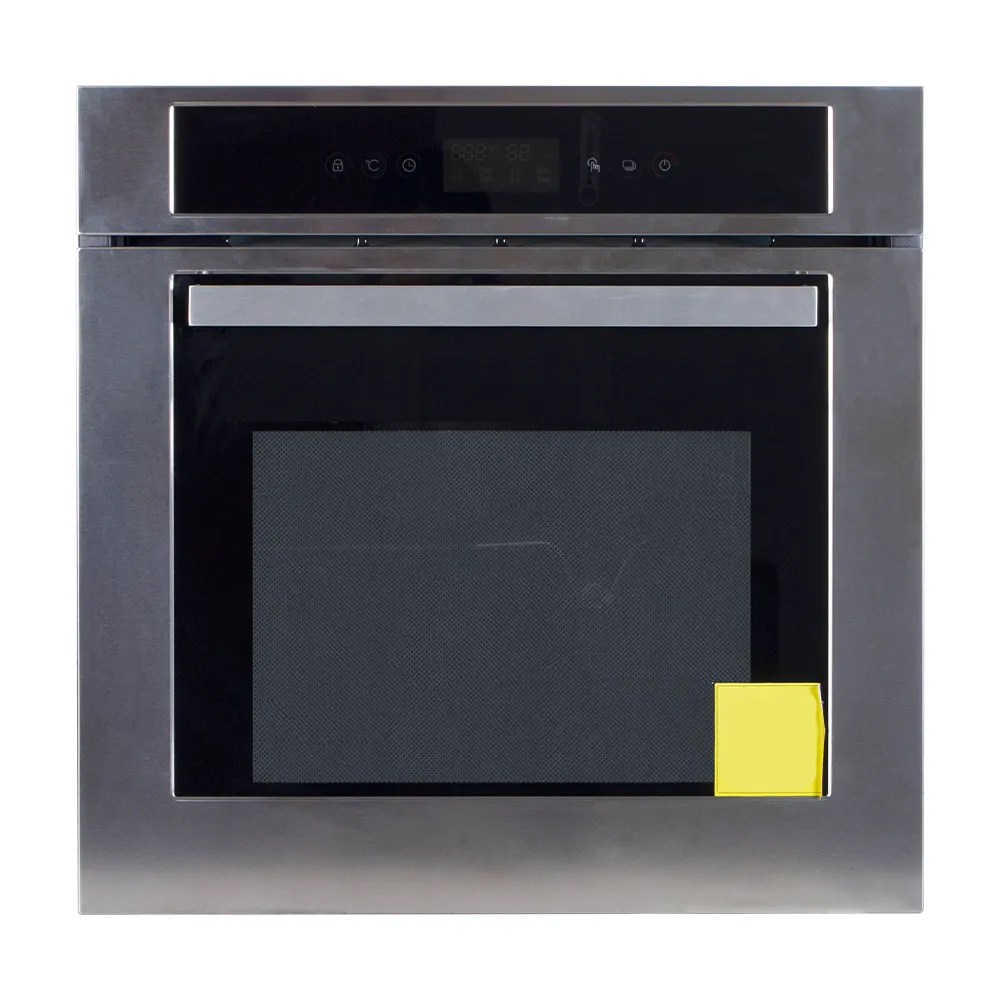
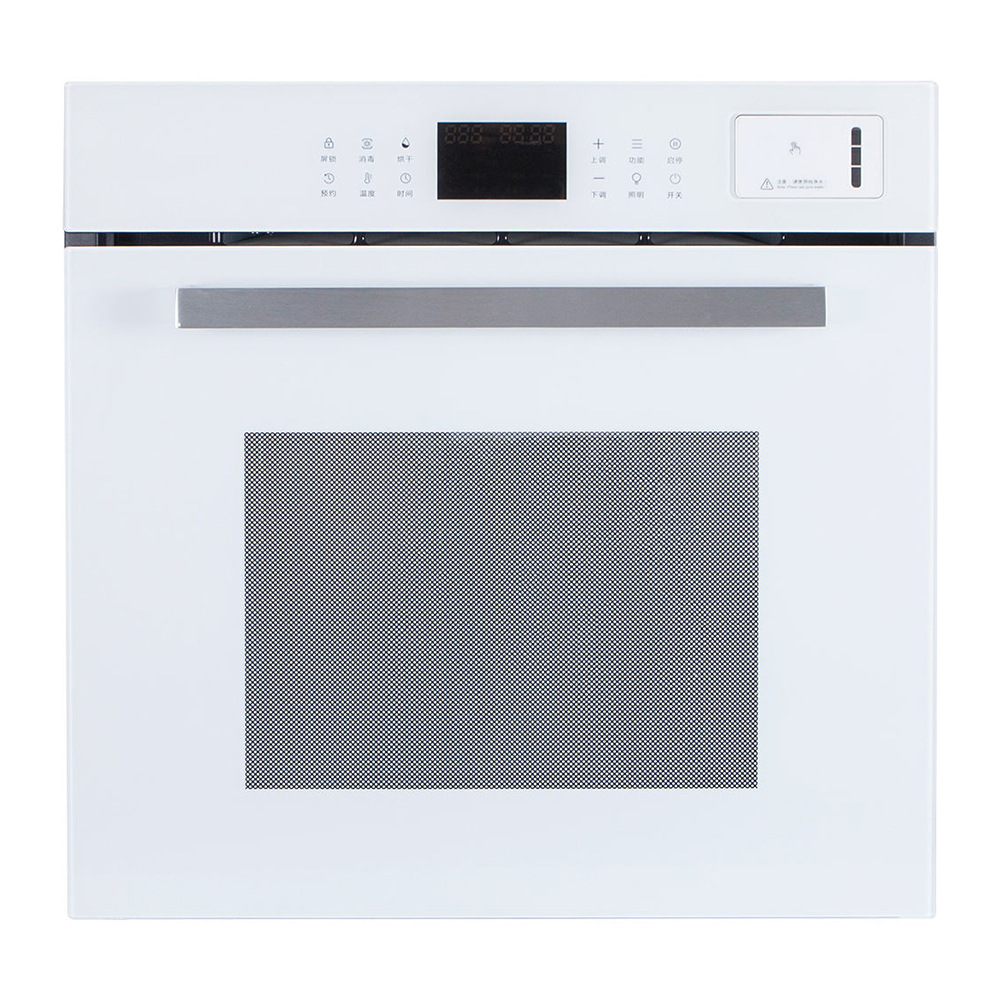
 Built-in Steam Baking Oven for Moisture-Controlled BakingThis built-in oven adds on-demand steam to keep breads and buns crusty outside yet soft inside. Its easy-clean liner and preset programs suit home bakers who want consistent results without extra manual steps.View Product →
For a cleaner finish in the same footprint, steam-assisted electric ovens add moisture on demand, which is ideal for crusty bread, steamed buns, and reheating leftovers without drying them out. To protect those cooking results, the oven must sit in a properly framed cavity; review how to integrate a built-in electric wall oven with the cabinet before finalizing the joinery.
Built-In Electric vs. Freestanding vs. Gas Options
To decide whether a built-in electric oven is the right choice, compare it with the two common alternatives on the criteria that matter most in daily use.
| Criterion | Built-in electric wall oven | Freestanding electric range | Gas wall oven |
|---|---|---|---|
| Installation | Recessed into cabinet; dedicated 240 V circuit | Floor-standing against cabinetry; 240 V connection | Recessed into cabinet; gas line and vent required |
| Floor space | Free below the oven | Occupies about 76 cm of floor | Free below the oven |
| Heat source | Electric elements with optional convection | Electric elements with optional convection | Gas flame; many models without a fan |
| Temperature stability | Digital thermostat, typical swing within ±5°C | Similar control but larger cavity swings | Wider swings, especially below 160°C |
| Preheat to 175°C | 8 to 12 minutes | 10 to 15 minutes | 10 to 15 minutes |
| Best suited for | Baking, roasting, multi-level cooking | Households needing cooktop and oven in one unit | Broiling and moist-heat meats |
A built-in electric oven also pairs with a separate cooktop, letting you combine a gas or induction cooktop with the electric cavity. In this layout, you avoid the maintenance of a combined range and free the cooktop zone for ventilation design or prep space.
Capacity and Configuration: Single, Double, or Large-Cavity
Choose oven capacity by the number of dishes that need to finish at the same time, not by kitchen size; a double built-in oven commonly fits the same cabinet column as a single large model.
- Single oven (60 to 80 L). Handles a whole chicken, two trays of baked goods, or a 35 cm roasting pan. Enough for most households.
- Double oven (two cavities, often 40 L plus 70 L). Lets you slow-cook in the lower cavity while broiling or baking in the upper one, the setup professional cooks ask for when entertaining.
- Large-capacity single oven (80 to 130 L). Fits large roasts, several sheet trays, or commercial-style pizza, and replaces a second smaller oven when space is limited to one opening.
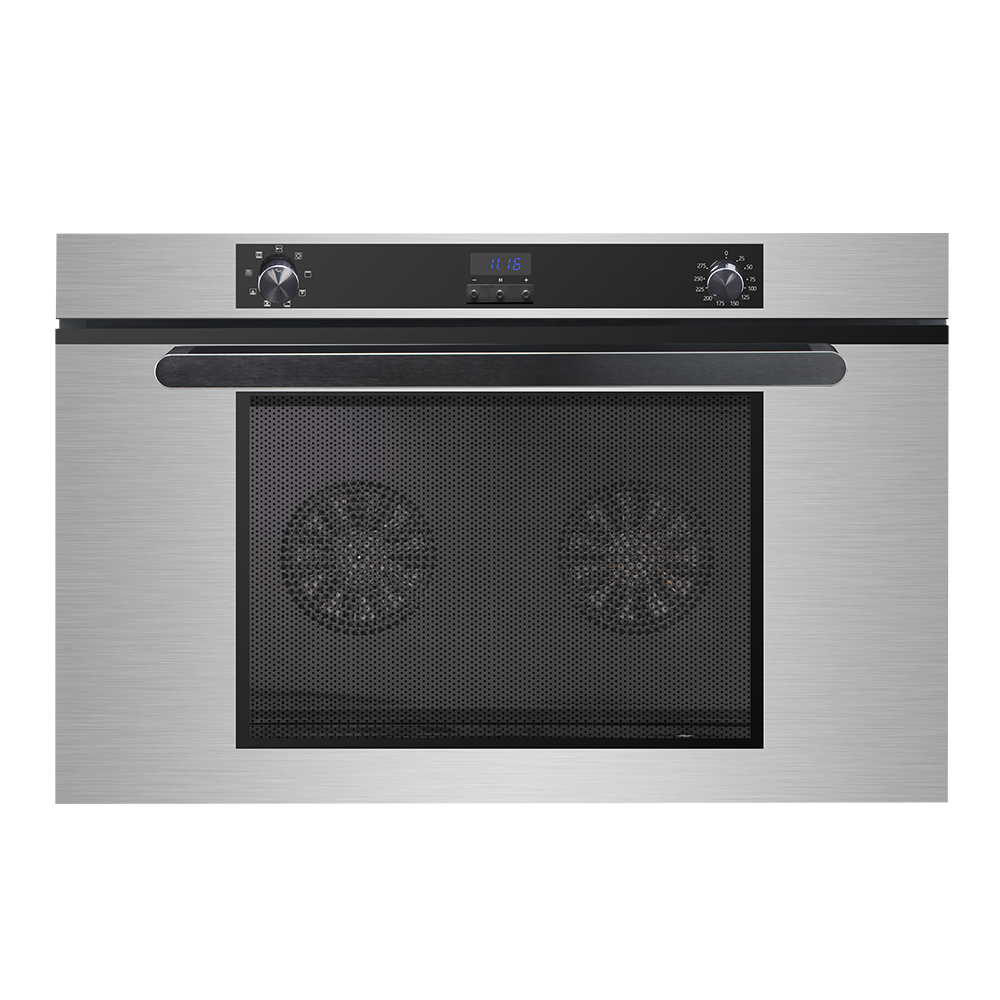 K126-900-DZ1 Dual Electronic Knob Oven with 126L CapacityWith a large 126L cavity, dual fans, and seven heating modes, this electric oven handles multiple dishes at once. Its black enamel liner and three-layer glass door support high-heat baking for caterers and pizza enthusiasts.View Product →
For a household that bakes weekly, an 80 L oven is a practical minimum. Serious caterers and pizza bakers will appreciate a 130 L cavity with dual fans for even airflow at high temperature.
Energy Efficiency in Everyday Use
Of the major residential oven formats, the built-in electric wall oven is often the most energy-efficient, because the insulated cavity, convection fan, and accurate thermostat shorten the cooking cycle and avoid wasted heat.
- Convection cooking at a lower temperature, typically 150°C instead of 175°C, with a 20 to 30 percent shorter cooking time, is the largest saving.
- Built-in ovens are wrapped in more insulation than many freestanding units because surrounding cabinetry needs protection; the same insulation keeps heat in the cavity.
- Turning the oven off 5 to 10 minutes before the end and letting residual heat finish the dish cuts consumption without changing the result.
- Multi-level baking in a fan-equipped electric oven uses roughly the same energy as baking one tray in a conventional oven.
Proper ventilation clearance around the cavity, as specified by the manufacturer, keeps these efficiency gains from being undermined by heat buildup.
Frequently Asked Questions
Do built-in electric ovens preheat faster than gas ovens?
Most electric wall ovens reach 175°C in 8 to 12 minutes, while comparable gas models often take 10 to 15 minutes because part of the heat escapes through the flue. Sensor-based preheat in electric units also tells you when the cavity is actually ready.
Are built-in electric ovens better for baking?
For most baked goods, yes. Electric heat is dry and stable, and the convection fan distributes it uniformly, which produces even browning and consistent oven spring in bread, pastries, and pizza. Gas ovens tend to have more humid heat and wider temperature swings, which some cooks prefer for certain meat roasts.
Will a built-in electric oven work in a small kitchen?
Yes. Standard widths of 60 cm, 70 cm, and 90 cm cover most cabinet designs. A 60 cm built-in model with 60 to 70 L capacity installs under the counter and preserves both worktop and floor space.
What electrical wiring does a built-in electric oven need?
Most require a dedicated 240 V circuit of 30 to 40 amps, with the breaker and cable size selected from the appliance's rated power, commonly 2.8 to 3.6 kW for compact models and 5 to 7 kW for double or large units. Have the circuit verified by a licensed electrician before installation.